

Green power transmission netw
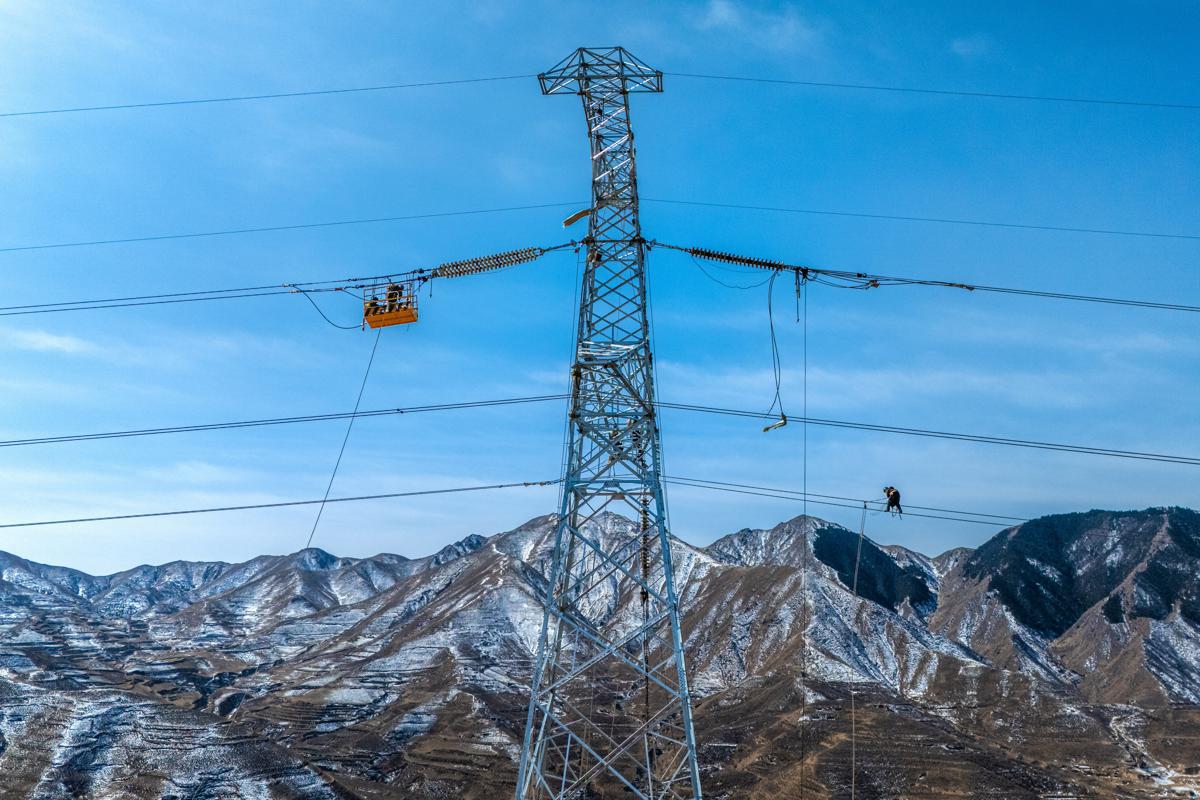
Construction workers build the Baiyin section of the Gansu-to-Shandong green power transmission corridor. [Photo provided to chinadaily.com.cn]
With the completion and commissioning of the 330-kilovolt Baiyin section of the Gansu-to-Shandong ultra-high-voltage (UHV) transmission project, Gansu has put the final link of its west-to-east green power corridor into operation, according to State Grid Baiyin Power Supply Company.
The nearly 200-kilometer transmission line marks the full buildout of the supporting grid network for China's first integrated wind-solar-thermal-storage UHV power delivery system, a key energy project under the national 14th Five-Year Plan (2021-2025).
With ample wind and solar resources, the Baiyin segment is regarded as the project's "last mile", enabling 4.5 gigawatts of newly installed renewable capacity in central Gansu to connect seamlessly with the UHV backbone grid that carries power thousands of kilometers east to major load centers. The completed line establishes a continuous chain linking western natural resources and eastern consumption.
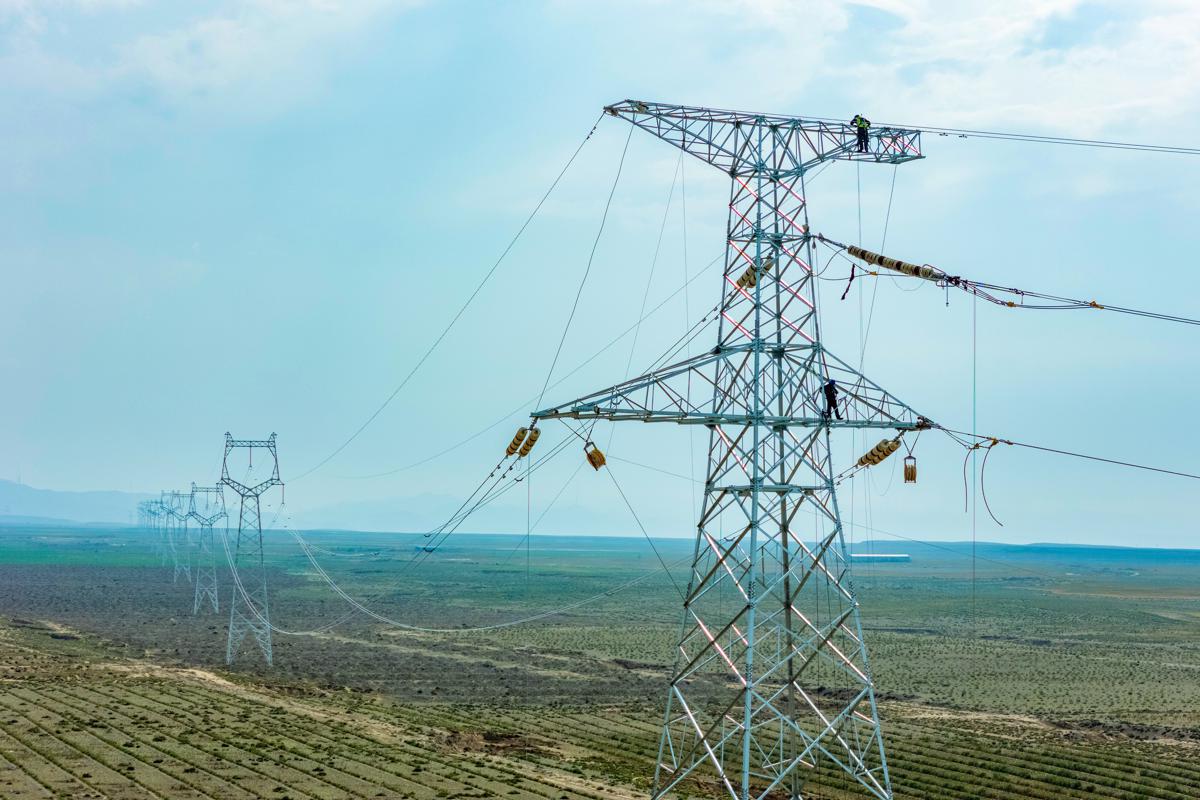
Construction workers build the Baiyin section of the Gansu-to-Shandong green power transmission corridor. [Photo provided to chinadaily.com.cn]
With the line now fully operational, the corridor is expected to transmit more than 11 billion kilowatt-hours of green electricity annually to Shandong and adjacent provinces in central and eastern China.
The delivery volume is equivalent to saving 3.5 million tonnes of standard coal and reducing carbon dioxide emissions by roughly 9 million tonnes each year, helping to ease supply pressure in one of China's largest power-consuming provinces while supporting its ongoing energy transition under the country's dual-carbon goals.
To boost capacity and efficiency, the project deployed high-strength aluminum alloy conductors with steel cores, raising transmission capability by about 30 percent. A mobile umbrella-type crossing frame, applied for the first time at this scale, improved line-stringing efficiency by 70 percent while sharply reducing onsite manpower demand.
The project also underpins Gansu's long-term energy development. Under the province's action plan to build a national new energy and equipment manufacturing base, Gansu aims to reach 80 gigawatts of installed renewable capacity by 2025.
Source: By Hu Yumeng and Ma Jingna in Lanzhou, chinadaily.com, Dec 03, 2025 [https://www.chinadaily.com.cn/a/202512/03/WS69301eaca310d6866eb2cb70_2.html]